- All team questions in one page
- Added a Maybe column
- Removed the 'If No, why not?' text from the last column
- Added spaces to ask for Application name and Jira ID

The source file is available at GitHub


 Over the 3 weeks I spent in the US (in an RV with family) I started working on a book based on the ideas shown at the "New Era of Software with modern Application Security" presentation (v1.0).


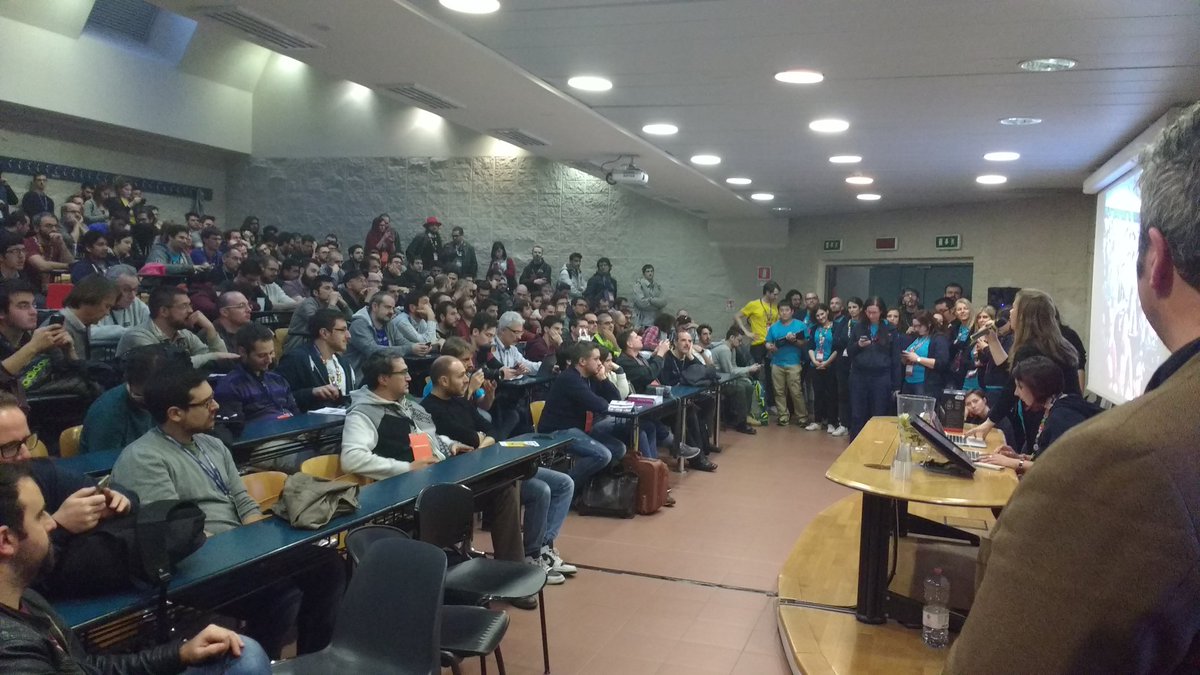
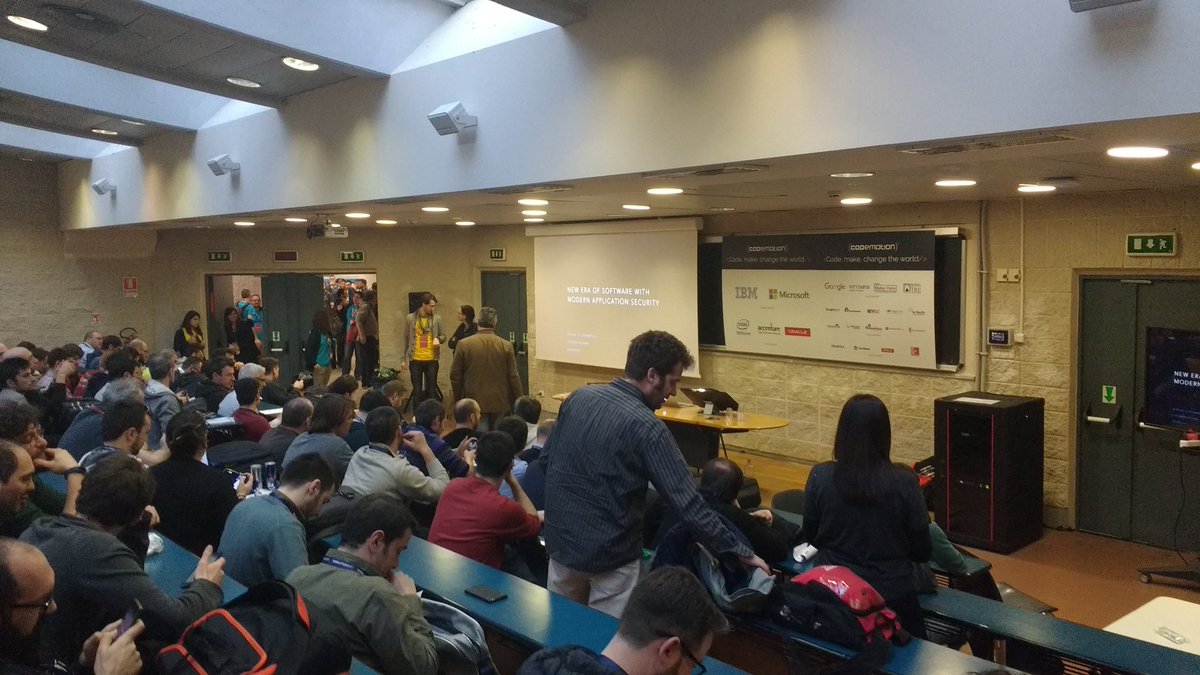 This is the final slide deck of the "New Era of Software with modern Application Security" presentation I delivered at Codemotion Rome, which was a developer-focused conference (with 2000 tickets sold).
 Description: "This presentation will start with an overview of the current state of Application Insecurity (with practical examples). This will make the attendees think twice about what is about to happen to their applications. The solution is to leverage a new generation of application security thinking such as: TDD, Docker, Test Automation, Static Analysis, cleaver Fuzzing, JIRA Risk workflows, Kanban, micro web services visualization, and ELK. These practices will not only make applications/software more secure/resilient, but it allow them to be developed in a much more efficient, cheaper and productive"
 When teaching about Threat Models, the most common question I get is 'How do I start?'.
I really like the idea of forcing someone to almost sign that they accept the risk. Forces them to really think about it.And here is my answer:
One thing I'm curious about is whether there is such as thing as "risk fatigue" like you have "monitoring fatigue". So, the first few times you accept risk you do so with a heavy heart, but each time you do it and there are no perceived negative consequences, it gets a little easier. That is until the point when you're completely exposed and something bad does actually happen. Having said that, the alternative of not physically accepting the risk in some way is far worse IMO, and that by using something like Jira you can at least measure the ratio of fixed vs risk accepted over time. Hopefully it moves in the right direction!

Quality is a measure of how successful a product is in what it is SUPPOSED to do.I think that measuring Quality by only looking at the success rate of a product is a very narrow definition of Quality.
AppSec is a measure of how many and what things product does that it is NOT SUPPOSED to.
These two are not related. A startup may have a good quality product full of security holes, and a bank may have a highly secure product that is also of great quality.
 Next march I'm going to be delivering the "New Era of Software with modern Application Security" keynote at Rome's Codemotion (17-19 March),
We are looking for an individual to who can take a hands-on approach to build and run an industry leading application security team. The Application Security Manager will develop, implement and run a secure application development program, with supporting standards and processes, and formal methodologies where relevant.
Securing our applications and customer data is critical to the success of our business. The Application Security Manager will be a security evangelist who can translate security concepts to technical and non-technical audiences, and will approach application security from the perspective of business risk. This person will be the leading authority for Application Security within the group.In addition to being an AppSec expert, the key for this role is to have significant development experience/knowledge.
   This document updates RFC6265 by defining a "First-Party-Only"
   attribute which allows servers to assert that a cookie ought to be
   sent only in a "first-party" context.  This assertion allows user
   agents to mitigate the risk of cross-site request forgery attacks,
   and other related paths to cross-origin information leakage.
It looks really good, and it seems that Chrome 50 is going to support it https://www.chromestatus.com/features/4672634709082112
The current solution seems to be inspired by the SameDomain Cookie attribute as described at http://people.mozilla.org/~mgoodwin/SameDomain/samedomain-latest.txt
I actually prefer the SameDomain name to First-Party-Cookies :)
I notice Amazon is not secure until you authenticate, then all pages become secure. This is an interesting approach. What do you think Dinis?This really sucks!
Well shame on Amazon for not also not doing 100% SSL
That said, amazon has an amazing application security team (with https://firebounty.com/bug-bounty-program/16/amazon) and they have quite a lot of visibility into what is going on in their platform (namely on fraud and account hijack/abuses)
Also, Amazon is getting there, for example note how if you start your amazon journey on https:// (in most cases) you still stay in SSL if you do some actions and go to checkoutYes there are users that don't support TLS and in some cases there are a couple performance tweaks that will need to be done. But we shouldn't be downgrading the security of 99% of users due to a couple user's locations or browsers.